
Why steakhouses run the highest food cost in the industry and how they stay profitable
What this article covers
| Typical food cost range for steakhousesCost per cut breakdown for common steaksHow beverage programs and sides offset high protein costsStrategies for managing beef purchasing and yield |
|---|
Why steakhouse food cost is the highest in the industry
Steakhouses operate at the highest food cost percentage in the restaurant industry, typically 35 to 45 percent. Prime and choice beef is expensive, and customers expect generous portions. But steakhouses can still be highly profitable because premium pricing generates high dollar margins and strong beverage programs provide critical offset.
Cost per cut breakdown
| Cut | Cost/oz | 12 oz Portion | Menu Price | Food Cost |
|---|---|---|---|---|
| Prime Ribeye | $1.75–$2.25 | $21–$27 | $52 | 40–52% |
| Choice Ribeye | $1.25–$1.60 | $15–$19 | $46 | 33–42% |
| Prime NY Strip | $1.50–$2.00 | $18–$24 | $48 | 38–50% |
| Filet Mignon (8 oz) | $2.50–$3.25 | $20–$26 | $55 | 36–47% |
| Bone-in Pork Chop | $0.55–$0.80 | $7–$10 | $32 | 21–30% |
How steakhouses stay profitable with 40 percent food cost
Premium pricing generates high dollar margins. A fifty-two dollar steak at 40 percent food cost generates thirty-one dollars in contribution margin. A twenty-two dollar chicken dish at 30 percent generates only fifteen dollars. The steak generates twice the dollar margin despite a worse percentage.
Beverage programs provide critical offset. Steakhouse wine lists, cocktail programs, and whiskey selections generate 70 to 80 percent margins. A fourteen dollar cocktail with three dollars in ingredients contributes eleven dollars.
High-margin sides. A loaded baked potato costs a dollar fifty and sells for eight dollars. Creamed spinach costs one dollar and sells for nine dollars. These 80 to 88 percent margin sides help offset the protein cost.
Managing steakhouse food cost
Negotiate beef pricing aggressively. Your beef supplier should be your closest vendor relationship. Volume commitments, forward contracts, and competitive bids can save 5 to 10 percent on your largest cost category.
Track daily protein counts. Count every steak in your walk-in at the start and end of each day. Compare to POS sales. Any discrepancy needs investigation.
Maximize yield. Trim from tenderloin becomes steak tartare or stew meat. Bones go into demi-glace. Every ounce of a twenty-five-dollar-per-pound tenderloin should generate revenue.
Tools like Vellin let you scan invoices with your phone and track food cost automatically. The core features are completely free.
Summary
Steakhouses run 35 to 45 percent food cost, the highest in the industry. This is sustainable because premium pricing generates high dollar margins, strong beverage programs provide margin offset, and high-margin sides balance the protein cost.
Prepared for the Vellin blog library.
Food Cost Percentage for Fine Dining Restaurants
Why higher food cost can mean higher profits when pricing and execution align
What this article covers
| Typical food cost range for fine diningWhy contribution margin matters more than percentageThe role of beverage programs in overall profitabilityStrategies for managing premium ingredient costs |
|---|
Fine dining food cost benchmarks
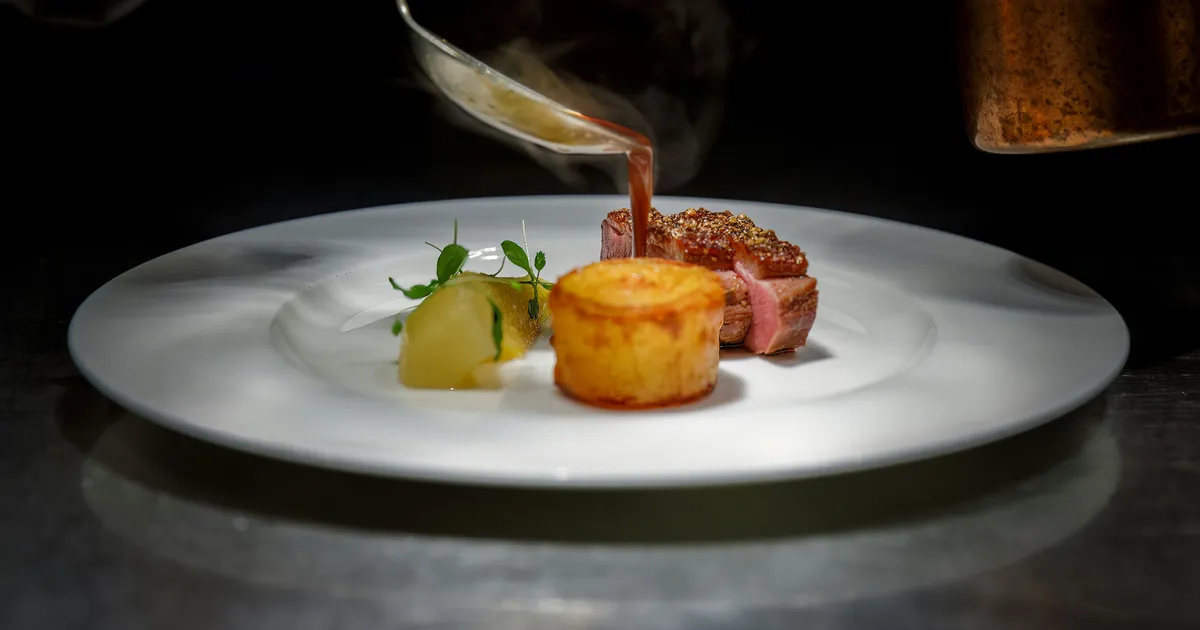
Fine dining restaurants typically run a food cost percentage of 30 to 40 percent, higher than most other restaurant segments. This does not mean they are less profitable. Fine dining can generate more gross profit per plate than any other restaurant type because the higher food cost is more than offset by premium menu pricing.
| Metric | Range |
|---|---|
| Average food cost | 30–40% |
| Top-performing fine dining | 28–33% |
| Acceptable range | 30–42% |
| Warning zone | Above 43% |
| Average entrée price | $40–$85 |
| Average plate cost | $14–$32 |
| Contribution margin per entrée | $26–$55 |
The contribution margin perspective
| Restaurant Type | Menu Price | Plate Cost | Food Cost | Contribution |
|---|---|---|---|---|
| Casual dining | $22 | $6.60 | 30% | $15.40 |
| Upscale casual | $38 | $13.30 | 35% | $24.70 |
| Fine dining | $62 | $24.80 | 40% | $37.20 |
The fine dining restaurant has the worst food cost percentage but the best contribution margin. That thirty-seven dollars per plate covers labor, overhead, and profit more effectively than fifteen dollars from a casual plate.
Why fine dining food cost is naturally higher
Premium ingredients. Wagyu beef, dry-aged steaks, sushi-grade fish, truffles, foie gras, and specialty produce all come at premium prices.
Lower throughput. Fine dining serves fewer covers per night. With fewer plates going out, each one needs to carry more contribution margin.
Elaborate preparations. Multi-component dishes with house-made stocks, reductions, and garnishes require more ingredients per plate.
Managing fine dining food cost
Cost every component meticulously. Every micro-green garnish, sauce dot, and specialty oil must be costed.
Leverage the beverage program. Fine dining wine programs with 68 to 78 percent margins significantly improve overall profitability.
Use tasting menus strategically. Tasting menus let you control food cost by choosing what goes on each course, balancing expensive proteins with lower-cost courses.
Tools like Vellin let you scan invoices with your phone and track food cost automatically. The core features are completely free.
Summary
Fine dining food cost of 30 to 40 percent is higher than other segments, but profitability depends on contribution margin, not percentage alone. Manage it through meticulous recipe costing, vendor negotiation, strong beverage programs, and strategic menu engineering.
Prepared for the Vellin blog library.
Food Cost Percentage for Fast Casual Restaurants
How fast casual balances fresh ingredients with efficient operations for strong margins
What this article covers
| Typical food cost range for fast casualWhy fast casual fits between QSR and full serviceFood cost by fast casual concept typeStrategies for optimizing fast casual margins |
|---|
Fast casual food cost benchmarks
Fast casual restaurants typically target a food cost percentage of 28 to 32 percent, a sweet spot between the lower costs of QSR at 25 to 30 percent and the higher costs of full-service casual dining at 28 to 35 percent.
| Metric | Benchmark |
|---|---|
| Target food cost | 28–32% |
| Top performers | 25–28% |
| Warning zone | Above 34% |
| Average check | $12–$18 |
| Typical plate cost | $3.50–$5.50 |
Food cost by fast casual concept
| Concept | Typical Food Cost | Notes |
|---|---|---|
| Burrito and bowl | 28–33% | Rice and beans cheap; proteins drive cost |
| Salad-focused | 25–30% | Greens inexpensive; toppings vary |
| Burger | 28–33% | Quality beef is the main driver |
| Fast casual pizza | 25–30% | Similar to traditional pizza economics |
| Asian bowl | 26–32% | Noodles and rice cheap; proteins vary |
| Mediterranean | 26–31% | Chickpeas, grains, vegetables affordable |
| Sandwich and deli | 27–32% | Deli meats and cheese drive cost |
The fast casual prime cost advantage
| Metric | Fast Casual | Casual Dining |
|---|---|---|
| Food cost | 30% | 32% |
| Beverage cost | 3% | 7% |
| Labor cost | 26% | 32% |
| Prime cost | 59% | 71% |
The 12-point prime cost advantage is why fast casual has been the fastest-growing restaurant segment for over a decade.
Optimizing fast casual food cost
Standardize everything. Every portion should be measured with scoops, ladles, and pre-portioned proteins. Consistency equals cost control.
Design for cross-utilization. The best fast casual concepts use the same ingredients across multiple menu items. Grilled chicken goes in bowls, salads, wraps, and plates.
Monitor protein portions. In a fourteen dollar bowl, the protein drives 40 to 60 percent of plate cost. An extra ounce of chicken on every bowl costs sixteen cents times three hundred bowls per day—over seventeen thousand dollars per year.
Tools like Vellin let you scan invoices with your phone and track food cost automatically. The core features are completely free.
Summary
Fast casual restaurants should target 28 to 32 percent food cost. The keys are standardized portions, cross-utilized ingredients, batch prep efficiency, and tight protein control.
Prepared for the Vellin blog library.