
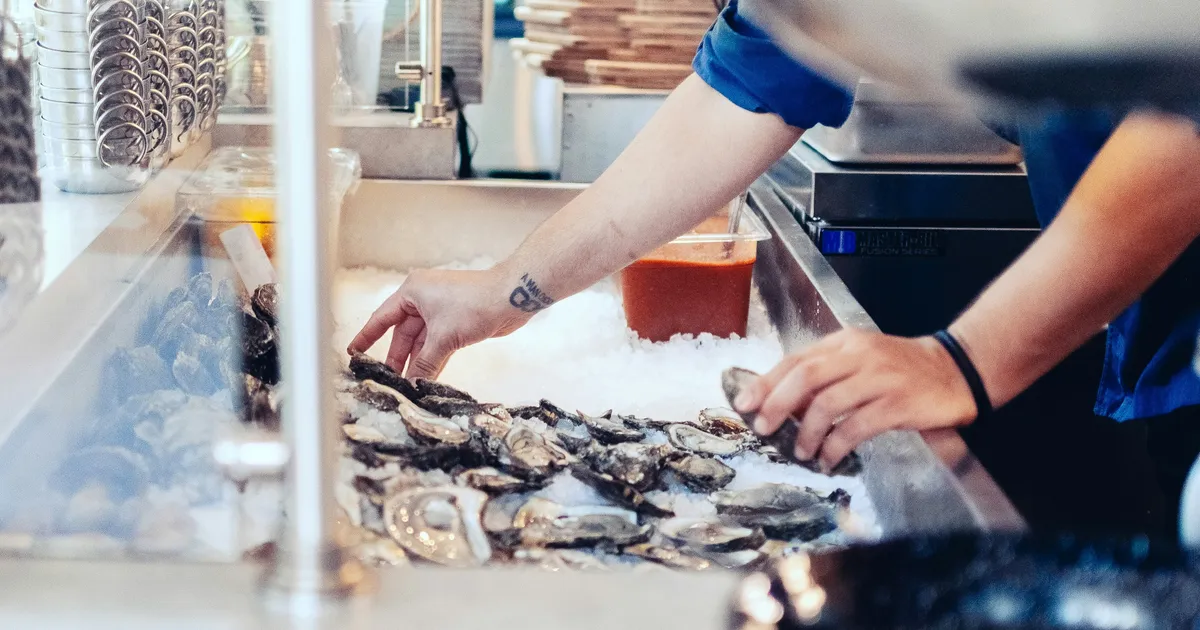
Managing the most volatile ingredient costs in the restaurant industry
What this article covers
| Typical food cost range for seafood restaurantsWhy fish prices are the most volatile in food serviceCost benchmarks by seafood dish typeStrategies for managing price swings and reducing waste |
|---|
Seafood restaurant food cost benchmarks
Seafood restaurants face the highest food cost volatility in the industry, with typical food cost running 32 to 42 percent. Fish prices can swing 20 to 40 percent within a single season, and the short shelf life of fresh seafood makes waste management critical.
| Item | Typical Food Cost |
|---|---|
| Fried fish dishes | 28–34% |
| Grilled fish entrées | 32–40% |
| Lobster | 38–50% |
| Shrimp dishes | 30–38% |
| Oysters (raw bar) | 35–45% |
| Crab cakes | 32–40% |
| Clam chowder | 22–28% |
| Fish tacos | 28–34% |
| Blended seafood restaurant | 32–42% |
Why seafood costs more
Price volatility. Fish prices are among the most volatile in food service. Weather, season, catch quotas, and fuel prices all affect supply. A halibut fillet that costs twelve dollars per pound in May might cost eighteen dollars in January.
Short shelf life. Fresh fish has a one to two day shelf life. Any fish not sold within that window is waste—and it is expensive waste.
Low yield. Whole fish is 35 to 45 percent usable fillet. Even skin-on fillets lose 15 to 20 percent when portioned. Your effective per-ounce cost is much higher than the purchase price.
Managing seafood food cost
Check prices daily. Fish prices change daily. Your fish purveyor should be contacted every morning for current market pricing before you write the order.
Use a market-price model. For expensive items like lobster, list market price on the menu and adjust daily. This protects your margin when prices spike.
Maximize yield. Fish bones for stock, salmon trim for salmon cakes, shrimp shells for bisque. Every part of the fish should generate revenue.
Feature lower-cost species. Sustainable species like mahi-mahi, catfish, and cod deliver excellent flavor at better margins.
Tools like Vellin let you scan invoices with your phone and track food cost automatically. The core features are completely free.
Summary
Seafood restaurants should expect 32 to 42 percent food cost. The keys are daily price monitoring, market-price menu items for expensive species, maximum yield on whole fish, and featuring lower-cost species alongside premium items.
Prepared for the Vellin blog library.
Bar Food Cost Percentage
How to manage food margins when beverages are the primary profit driver
What this article covers
| Typical food cost range for bar and pub foodWhy bar food cost is lower than most restaurant typesCombined food and beverage margin analysisStrategies for keeping bar food cost in check |
|---|
Bar food cost benchmarks
Bars and pubs typically run food cost at 20 to 28 percent, lower than most restaurant types. Bar food tends to be simpler—wings, burgers, fries, nachos—with lower-cost ingredients and smaller portions. The real profit driver is beverages, where margins run 75 to 82 percent.
| Item Category | Typical Food Cost |
|---|---|
| Wings | 28–35% |
| Burgers | 26–33% |
| Fries and onion rings | 15–22% |
| Nachos | 20–28% |
| Sliders | 25–30% |
| Flatbread and pizza | 20–28% |
| Quesadillas | 18–25% |
| Mozzarella sticks | 18–24% |
The real economics: food plus beverage combined
Bar food exists to support beverage sales. An eight dollar plate of nachos with 25 percent food cost generates six dollars in food margin, but the two beers ordered alongside it generate eight dollars in beverage margin.
| Order | Food Rev | Food Cost | Bev Rev | Bev Cost | Total Margin |
|---|---|---|---|---|---|
| Wings + 2 beers | $14 | $4.20 | $12 | $2.40 | $19.40 |
| Burger + cocktail | $16 | $4.80 | $14 | $3.50 | $21.70 |
| Nachos + 3 beers | $10 | $2.50 | $18 | $3.60 | $21.90 |
The combined margin on food plus beverage is what matters. Bars can run 25 percent food cost and generate excellent profitability because 60 to 70 percent of revenue comes from beverages at 18 to 25 percent cost.
Managing bar food cost
Keep the menu simple. Ten to fifteen items maximum. Fewer items means less waste, simpler inventory, and better portion control.
Standardize every portion. Pre-portion proteins during prep. Use scoops for toppings. Measure sauce portions.
Focus cost control on beverages too. Since beverages are 60 to 70 percent of revenue, small improvements in pour cost have larger dollar impact. Use jiggers for every pour and count liquor inventory weekly.
Design food to drive beverage sales. Salty, shareable food encourages drink orders. Wings, pretzels, and nachos are classic examples.
Tools like Vellin let you scan invoices with your phone and track food cost automatically. The core features are completely free.
Summary
Bar food cost should be 20 to 28 percent. The food menu supports beverage sales, where the real margin is. Keep the menu simple, portions standardized, and focus cost control on both food and beverage sides.
Prepared for the Vellin blog library.